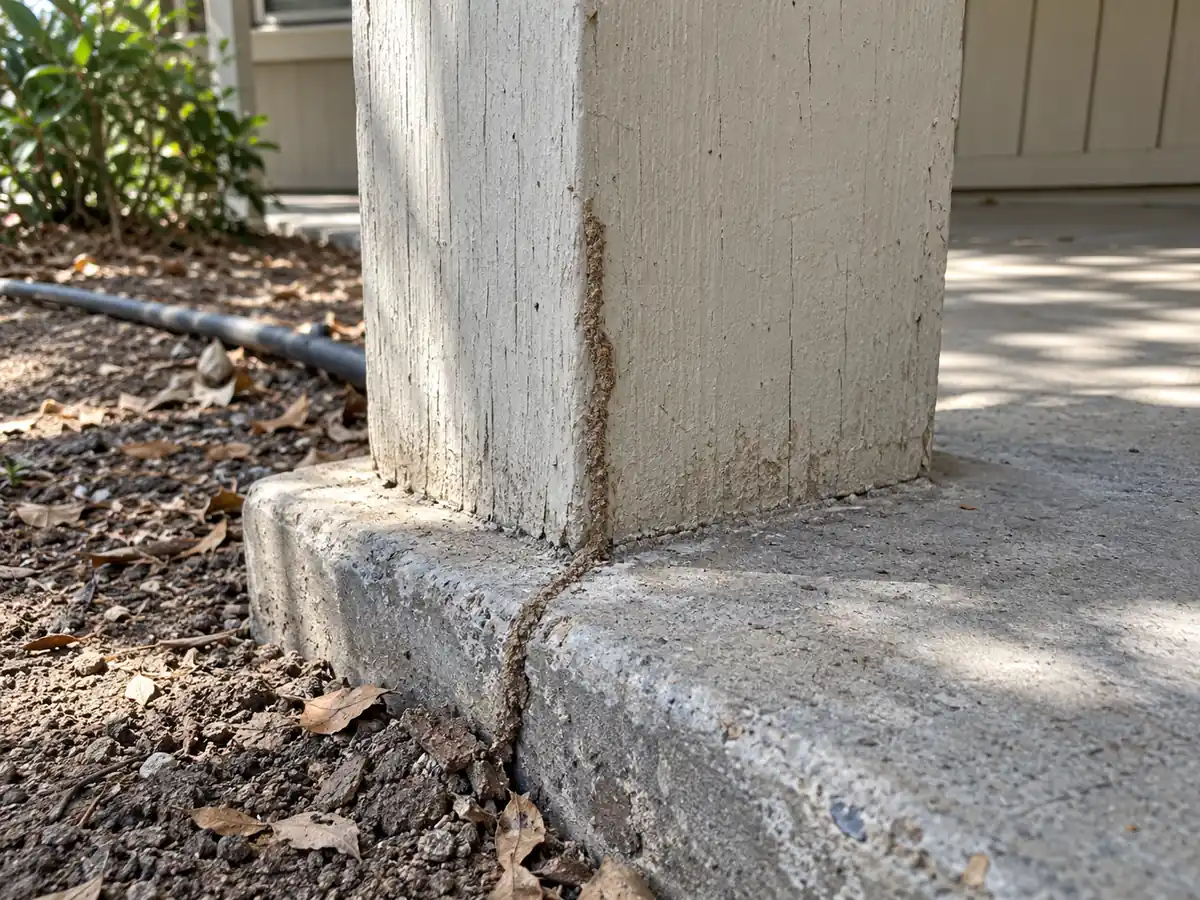
Termite control in Hemet, CA
Termite control in Hemet, CA is different from the eastern states, because the termite that matters here lives in the wood itself.
Western drywood termites do not need soil contact. A colony can sit in a fascia board, an eave or a picture frame for years.
Small, hard, six-sided pellets under a window frame or in a pile on a sill, a blistered patch of paint or a hollow-sounding board are the usual first signs.
Do not sweep them away before the inspector sees them.
Subterranean termites also occur, particularly where irrigation or a leak keeps the soil damp against a foundation.
If you have seen termites near Valle Vista, leave the soffit gap as you found it and photograph it.
After you call
We check your address and then arrange an inspection.
Termites in Hemet: what is different here
Hemet's heat, dry air and stucco construction make drywood termites the leading concern. Swarms leave the colony on warm days, often in late summer and autumn, and look for cracks in dry wood.
Stucco hides a lot. Termites can work behind it for years, and the only visible sign may be a few pellets on a ledge or a tiny round hole in the trim.
Subterranean termites are less common than in wetter regions, but they appear around leaking irrigation, planters against the wall and the base of stucco that touches soil.
Drywood and subterranean termites in Hemet
- Western drywood termite (Incisitermes minor): lives and feeds inside sound, dry wood, and leaves tiny pellets, called frass, from kick-out holes.
- Near Hemet Valley, termites turn up at the attic hatch before they turn up in the main rooms.
- Dampwood termites: appear in very wet or rotted wood, which is uncommon in the dry valley.
- Winged ants: often mistaken for termites. A photograph shows the waist and antennae.
What a termite inspection in a Hemet home looks at
- Eaves, fascia boards, rafter tails, window and door frames, and the trim around the garage.
- The attic, with a flashlight, for pellets, galleries and damaged framing.
- Stucco edges, weep screeds and places where the wall meets the soil or a planter.
- Irrigation heads, leaking hose bibs and downspouts that wet the foundation.
- Fences, patio covers, pergolas and wood outbuildings, which are often infested first.
- Any areas that could not be reached, which the report should list.
How termites are treated in Southern California
The right method depends on the termite, the extent of the activity and the construction.
- Whole-structure fumigation, which treats every part of the building with a gas under a tent and requires you to leave for a few days.
- Local treatment of accessible infested wood by drilling, injection or surface application.
- Soil treatment or bait stations for subterranean termites.
- Moisture repairs, such as fixing an irrigation leak or lowering soil against the stucco.
Ask which areas the treatment will reach, what is excluded and what preparation, such as moving plants and sealing food, is required.
What to look for near Seven Hills
- The time of year in Hemet changes the pressure, and termites near Seven Hills are still confirmed at the window well.
- Sweeping away pellets or repairing trim before it is inspected.
- Assuming that a fumigation a decade ago still protects the house.
- Leaving wood scraps, stakes and old fence boards in contact with the building.
- Buying a house without a wood-destroying pest report.
Termite activity through the Hemet year
Drywood termite swarms are most often seen from late summer into autumn, on warm days after a spell of heat. The first cool rains can trigger another flight.
Subterranean termites swarm after spring or autumn rain. In a dry valley, any swarm indoors deserves attention.
Colonies stay active through the mild winter, so an inspection works in any month.
Buying or selling a Hemet home: the termite report
Homes around Seven Hills get the termites inspection at the bath trap first, because that is where the activity usually starts.
Sellers can arrange an inspection before listing, which avoids last-minute surprises. Buyers should ask for the full report, not just a summary.
Whatever the report says, keep it with the house papers, because it helps the next inspector understand the history.
Questions about termites in Hemet.
What people in Hemet ask about termites.
In Hemet, drywood termite pellets show up on window sills of stucco homes through the hot months, while subterranean mud tubes are more often found where irrigation keeps the soil along the foundation damp. Photograph either sign and leave it in place for the inspection.
How do I know whether I have drywood termites in Hemet?
Look for small, hard, six-sided pellets in tiny piles near the wood. They can be sand-coloured or dark. A pile that grows back after you clean it means the colony is active.
Do I need to fumigate for drywood termites?
Not always. Whole-structure fumigation is one method, and local treatment is another. The inspection should say how far the colony has spread.
How long do I have to leave home during fumigation?
Usually a few days. Our technician gives you dates, a preparation list and the time you can safely return.
Can termites live in my fence or pergola?
Yes. Drywood termites feed on wood outdoors too, and an infested fence can pass them to the house.
What does a termite report cover?
It records what could be seen, what was probed and which areas were inaccessible. Ask for the full report and keep it with the house papers.
Are termites common in stucco homes?
They are, and the stucco can hide them. A good inspector looks at the trim, the attic and any ledge where pellets might fall.
Is there a sign of subterranean termites in Hemet?
Mud tubes on foundation walls, damp soil against stucco and swarmers after rain. They are less common but real, particularly around leaks.
How often should a Hemet house be inspected?
Many owners choose a yearly inspection, and always before buying or selling. Colonies grow slowly, so catching one early limits the cost of repair.
Termites near Hemet Valley
Ready to ask about
termite control?
Homes around East Hemet get the termites inspection at the sill plate first, because that is where the activity usually starts.
Back to homeCoverage for termite control in Hemet is confirmed from the street, including places such as Diamond Valley Lake area. The details are on the Exterminator nearby in Hemet, CA page.